LinkedIn
 Facebook
 Email
Email
 Twitter
 Quickly evaluate current rents with QuickView™ Rent Estimates

The Binder Method Explained: How Landlords Can Raise Rent While Keeping Great Tenants
When it’s time to raise rent, many landlords brace for awkward conversations or the risk of losing reliable tenants. But what if you could adjust rent with your tenants — not against them?
That’s the idea behind the Binder Method, a strategy that uses transparency and real market data to help tenants understand — and often agree with — reasonable rent increases. The method was popularized by Washington-based investor Dion McNeeley, who owns and self-manages 16 units and earns six-figure profits in annual rental income.
What Is the Binder Method?
The Binder Method is a rent-setting strategy designed to turn rent increases into a collaborative, data-driven conversation. Instead of sending a rent-increase notice, the landlord meets with the tenant and walks them through a “binder” — a short packet that includes:
- Comparable market rents for nearby properties with similar size and features
- Details about the property (address, photo, purchase price, and recent upgrades)
- A map or list showing current rental listings and pricing in the area
- Notes on maintenance or costs (like taxes or insurance) that affect ownership
By the end of the walkthrough, the tenant clearly sees how their current rent compares to the market — and often suggests a fair increase themselves.
Stay connected
Get rental market insights delivered straight to your inbox.
How It Works: A Real Example from Dion McNeeley
When McNeeley acquires a new property, he often inherits tenants who are paying far below market rent — sometimes hundreds of dollars under local averages. Rather than issuing a sudden rent hike, he schedules a meeting with each tenant and brings a three-ring binder filled with market data.
- Page 1: a photo of the property and his purchase price
- Page 2: a map from Rentometer showing nearby comparable rentals with the same bed/bath count.
- Pages 3–5: a print out of 3-5 comps with their current asking rents.
Then, McNeeley educates tenants about how property costs (taxes, insurance, maintenance) have increased — and asks a simple question:
“What do you think is fair?”
In one case, both units of a duplex were renting for about $1,100/month while comparable rentals were going for around $1,600. Rather than demanding full market price, McNeeley’s tenants — after reviewing the binder — suggested $1,460 on their own.
That one conversation added more than $700 per month in cash flow while keeping both tenants happy and in place.
“Happy tenants don’t trash the place, and they don’t move,” McNeeley told Business Insider. “Tenant turnover is one of the most expensive things a landlord has to deal with.”Over nine years, he’s had to fill only two vacancies — one due to a tenant inheriting a house and another who passed away — proving that transparency pays off.
How to Use the Binder Method
Here’s a step-by-step approach you can adapt for your next renewal period:
1. Gather Your Data
Use Rentometer Pro Reports to generate accurate, local rent comparisons for your unit type and area. Include median, average, and range data for a quick snapshot of current market rents.
(Example: “Similar 2-bedroom units within 0.5 miles are renting for $1,850–$1,975, while your current lease is at $1,725.”)
2. Add Context and Value
Include a short note summarizing any maintenance, improvements, or tenant benefits since the last lease term — such as updated appliances, new flooring, or a pet-friendly policy.
3. Present the Binder
Schedule a renewal conversation (or email) and share your “binder” — either digitally or as a printed summary. Walk the tenant through the data calmly and professionally.
4. Suggest Options
Offer flexibility, such as:
- A 12-month renewal at a slightly higher rate
- A longer 24-month renewal to lock in pricing
- Or a smaller increase in exchange for a longer commitment
This approach keeps rent negotiations positive and centered on mutual value.
Why the Binder Method:
Higher Tenant Retention – When tenants feel informed and respected, they’re more likely to renew even with moderate rent increases.
Less Conflict – Market data provides an objective foundation for pricing decisions. The increase feels justified, not arbitrary.
Professionalism & Trust – Presenting data in an organized way signals that you run your rental like a business — not on emotion or guesswork.
Better Long-Term Returns – Consistent rent growth and low vacancy are key drivers of healthy cash flow.
How Rentometer Makes It Easy
The success of the Binder Method depends on accurate, localized rent data — and that’s where Rentometer comes in.
With Rentometer Pro Reports, you can instantly:
- Compare your current rent to nearby listings
- Print branded, data-backed reports to include in your binder
- Track market shifts over time to support future renewals
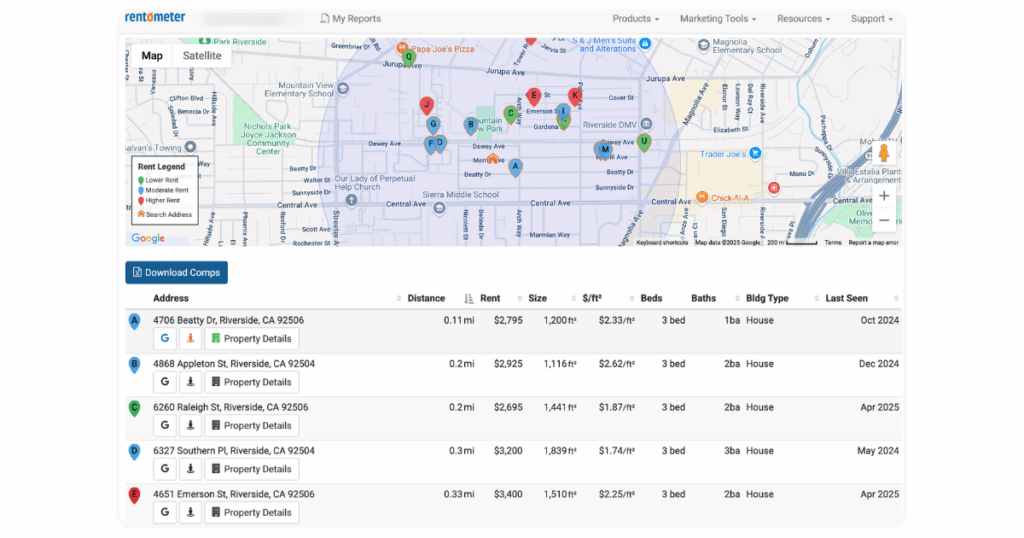
Whether you manage one property or a full portfolio, Rentometer helps you justify rent increases with real numbers — not guesswork.
Final Takeaway
Raising rent doesn’t have to mean losing good tenants. The Binder Method turns data into dialogue — helping you maintain transparency, trust, and profitability.
Before your next renewal, run a Rentometer Pro Report and build your own “binder” — your tenants will appreciate the clarity, and your bottom line will thank you.
Stay connected
Get rental market insights delivered straight to your inbox.